


Awning Installation in Chicago:
Built to Handle Real Wind, Not Just Rain

Horizon Restoration is the only contractor near Chicago to hold both CertainTeed ShingleMaster™ PREMIER and SidingMaster™ PREMIER credentials.

All of our crews are in-house and trained and certified on the roofing systems they install. 

That allows us to offer industry-leading manufacturer-backed warranty options that many competitors can’t.

Better Business Bureau A+ accredited business
Forbes Home 2024 best roofing contractor in Chicago
Illinois Governor's Hometown Award
CertainTeed ShingleMaster PREMIER certified roofing contractor
See If My Roof Has Storm Damage

Free storm damage inspection or a no-pressure quote for your project

4.9 out of 5 293 Google reviews
Request an appointment
302 reviews on GoogleEXCELLENT★★★★★★★★★★
Linda Millbrandt
2 months ago
Google
★★★★★★★★★★

Horizon restoration did a great job in getting our roof claim approved by our insurance. They worked hard to make sure the insurance company covered the cost of the roof and gutters. AJ was always on top of things and kept us informed every step of the way. We recommended them to our family member who also signed with AJ and Horizon Restoration due to how well they managed our project. We would highly recommend them for their roofing expertise, knowledge with insurance companies and over all communication during the project. In addition to this the roof looks great and their team did a great job on the roof and the clean up.

michael zaremba
4 months ago
Google
★★★★★★★★★★

Overall great experience! Julius was fantastic to work with. He was very attentive to all the details and always there to answer questions and get the job done right. Whenever he said he would take care of something, he took care of it. The crew did a fantastic job and the workmanship was top notch. I can not believe how quickly they did a full replacement of our sheathing and roof shingles and still did a high quality job. They left the worksite spotlessly clean. We are getting lots of compliments from our neighbors on how good our roof looks. If you want your roof done right, go with this company.

Steve Ulmanovic
2 months ago
Google
★★★★★★★★★★

Paul, thank you so much to you and your entire team for our beautiful new roof. We couldn't have made a better choice. Thank you for all your help with the insurance paperwork and for making the whole process so smooth. We highly recommend Chicago Horizon Restoration Roofing Company to anyone looking for quality work and outstanding service! Pamela & Steve

KLARA Goldin
6 months ago
Google
★★★★★★★★★★

Horizon Restoration did an amazing job on my roof! Paul was fantastic to work with. Super responsive, most important he was honest and really cared about making sure everything was done right. He made what could have been a stressful process feel easy. The crew was fast, clean and very professional. I’m really happy with the result and would definitely recommend them.

Tim Paterson
a year ago
Google
★★★★★★★★★★

Our contact at Horizon Restoration was Art. He worked with our insurance company for over a year and a half to have our roof and siding replaced. The other persons behind the scenes at the office who were instrumental in assisting Art were Paul-Manager, Ruby-who was in charge of all correspondence, Jack-Install Manager who coordinated the crews for both the siding and roof, Claudio-On Site Roofing Manager and Mike-On Site Siding Manager. They worked seamlessly as a team and were always available when we had any questions or concerns. It is so nice to have Horizon Restoration going to bat for us. Especially Art whose experience and knowledge was so key in getting our insurance company to approve the replacement of our roof and siding. Our roof and siding look so nice we highly recommend Art and Horizon Restoration to anyone in need of their services. Thank you Art and Horizon for everything.

What Your Siding Type Means for Awning Mounting

An awning is only as solid as the wall it’s bolted to. The fasteners have to reach framing or solid masonry, not just the siding panel. And every hole made through the exterior needs to be sealed and flashed so water runs out instead of in.

Here’s the part most folks don’t think about. Siding isn’t structural. It’s a skin. A vinyl panel can’t hold a fifty pound frame plus wind load, so the lag bolts have to pass through the siding and land in studs, a rim board, or solid brick. Miss the framing and you’ve got a pretty awning hanging on a hollow wall.

Awnings installed on a Chicago-area home

Every siding type behaves a little differently.

Vinyl siding

panels need to float and expand, so we use standoff blocks instead of crushing the panel tight against the wall.

Fiber cement like James Hardie

strong and stable, but it cracks if you overdrive a fastener or drill without the right bit.

LP SmartSide engineered wood

holds fasteners well, though any cut edge or new hole has to be sealed or the core will soak up water.

Brick and masonry

solid anchoring, and we drill into the brick itself rather than the mortar joint.

Stucco

the most forgiving to look at and the least forgiving to seal, so flashing work matters most here.

A lot of the older homes we see in places like Oak Brook and Elmwood Park have brick or brick veneer on the front and siding on the sides. Same house, two completely different mounting jobs. We’ve had homeowners surprised when we tell them the front awning anchors one way and the patio awning another.

Then there’s the resealing. Every penetration gets sealant behind the bracket, not just a bead smeared on top after. Surface caulk looks fine for a season, then it shrinks and cracks and you’ve got a slow leak nobody notices until the sheathing is soft.

If your siding is already loose, cracked, or storm damaged, fix that first. Mounting new hardware to a wall that needs work just buries the problem - and we'd rather tell you that up front than bolt into it.

Choosing Between Fixed and Retractable Awnings

This is the question we get first, almost every time. Fixed or retractable? There’s no universal right answer, but there is a right answer for your house.

Fixed awnings

A fixed awning stays put year round. The frame is anchored to the wall and it doesn't move. That makes it simple and sturdy, and it's usually the better pick for a doorway, a basement stairwell, or a spot where you want shade and rain cover on a permanent basis. The downside is winter. Snow piles up on a fixed frame, and around here we get storms that dump heavy wet snow followed by a freeze. If a fixed awning goes up over a patio, it needs enough pitch and enough structure to shed that load.

Retractable awnings

Retractable awnings solve the snow problem by folding away. You use it May through October, then bring it in. Most homeowners with a back patio or deck end up here.

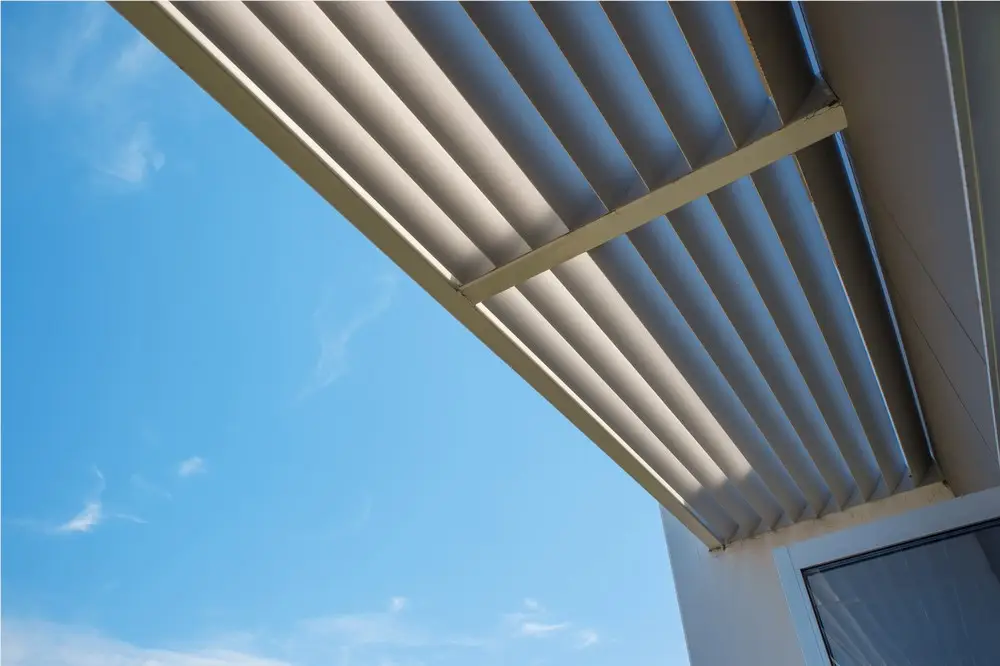
Exterior window awning providing shade against a blue sky

Here’s what drives the decision:

One more thing people forget. If the awning goes under a roofline, water runoff hits it. We check the gutter and downspout layout before we ever pick a mounting height, because a soaked awning in the wrong spot turns into a mess fast.

Not sure which way to go? That’s normal, and it’s easier to sort out standing in your yard than over the phone.

When a Professional Installer Isn't Necessary

Not every awning needs a crew. Some don’t need one at all. If you’re shopping for a small freestanding patio canopy that sits on legs and never touches the house, you don’t need an installer. You need two people and an afternoon. Same goes for a lightweight pop-up shade over a grill area. Bolt it, weigh it down, done.

We’d rather tell you that now than sell you something you don’t need.

There’s also the repair side. A lot of the calls we get about awning installation turn out to be simple fixes on an awning that’s already fine. A loose fastener. A crank arm that binds up because nobody’s cleaned it since the Obama administration. Fabric that looks dirty but isn’t torn. Those aren’t installation jobs, and you shouldn’t pay installation money for them.

Awning installed on a home exterior

That last one matters more than people realize. If hail or wind hit your house and you're waiting on an adjuster, hold off on mounting anything new to that wall. New holes in siding that's about to be inspected can muddy the claim. We've seen it complicate things for homeowners in Naperville and Downers Grove after big summer hail events. Wait for the adjuster, get the siding settled, then do the awning.

And if your wall framing is questionable? Don’t guess. That’s the line where do-it-yourself stops being cheaper – a pulled-out mount takes siding with it.

How Installation Day Works, Start to Finish

Most awning installations are a one-day job. Some are half a day. The part that takes the longest isn’t the awning itself, it’s making sure the wall behind it can hold the load.

Here’s how a typical day runs.

01

We confirm the layout on the wall.

Height, projection, and clearance get marked in chalk before anything gets drilled. This is your last easy chance to move it a few inches.

02

We find solid backing.

Brick, block, wood framing, and fiber cement all get fastened differently. On older brick homes we anchor into the brick itself, not the mortar joints, because mortar lets go over time.

03

Brackets go up and get checked for level.

A retractable arm that isn’t level will pull crooked every time you open it.

04

The awning frame is mounted to the brackets.

Bigger units need two or three people on the lift, so don’t be surprised by the crew size.

05

Fabric gets tensioned and the pitch gets set.

Pitch matters here. Flat awnings hold water and snow, and we get plenty of both.

06

We cycle it open and closed several times, adjust the stops, and clean up.

Close-up of an installed awning mounted to a home's exterior wall

You don’t need to be home the whole time, but stick around for the layout step if you can. We’d rather move a mark than move an anchor.

A few things that slow a day down: hidden rot behind siding, a wall that’s out of plumb, or a motor that needs a dedicated outlet. We see the rot issue constantly on homes where old gutters overflowed against the wall for years. If we find it, we stop and show you before we keep going. Patching over soft sheathing is how awnings end up sagging two winters later.

Before we leave, we show you how to operate it and when to retract it. Wind is the thing that ruins awnings around here, not sun.

Sealing and Anchoring: The Step That Prevents Water Damage

Here’s the part nobody shops for. An awning has to bolt into your house, and every bolt is a hole. Get those holes wrong and you don’t find out for two years, when the drywall inside starts to stain.

We see this every single week on awnings somebody else put up. The frame is fine. The fabric looks new. But the wall under the mounting rail is soft, and the siding behind it has been wet since the day it went on.

Good anchoring comes down to what you’re hitting and how you close it up behind.

Find the real structure.

Studs, a solid header, or sound masonry. Never siding alone, and never a hollow rim board that's already rotted.

Match the fastener to the wall.

Lag bolts into framing, sleeve anchors into brick. In brick we anchor into the brick face, not the mortar joint, because mortar crumbles under a repeated load.

Seal the penetration itself.

Exterior-grade sealant in the hole before the bolt goes in, not smeared over the top afterward.

Flash and shed water above the rail

so rain runs off the wall instead of tracking down behind the bracket.

That third step is where most jobs fail. A bead of caulk over a wet bolt head is not waterproofing, it's a five year countdown.

Chicago weather makes this worse than it sounds. Water gets into a poorly sealed hole in November, freezes, expands, and widens the hole a little. Then it thaws. Then it does it again. On older brick homes in suburbs like Oak Brook and Downers Grove, we’ve pulled awnings off walls where freeze-thaw had opened the anchor points wide enough to fit a pencil.

Wondering if an existing awning is already leaking? Look inside first. Water stains at the top of a window, bubbling paint, or a musty smell in that room usually shows up before anything looks wrong outside.

We treat the mounting wall as part of the job, not an afterthought. If the siding or trim under the awning is already damaged, we tell you before we bolt into it – covering rot with new hardware helps nobody.

Looking for awning installation in Chicago?

Free inspection, a written scope you can actually read, and no pressure to sign anything the same day. If we find nothing wrong, we will tell you that too.

Frequently Asked Questions

It depends on how you’ll use the space. Fixed awnings work best for doorways or spots that need year-round cover, but they can hold heavy snow in winter. Retractable awnings are better for patios since you can fold them away before storms hit. Open backyards in suburbs like Plainfield and Naperville also catch more wind, which affects how well a retractable arm holds up. We can help you decide once we see your wall and layout.
Not always. Small freestanding canopies or pop-up shades that don’t attach to your house don’t need an installer. But anything bolted to your wall does, because the fasteners must reach solid framing or masonry, not just siding. If your awning is loose or the crank sticks, that’s usually a simple repair, not a full installation. We’d rather point you to the cheaper fix than sell you something you don’t need.
Most siding types can support an awning, but each one mounts differently. Vinyl needs standoff blocks so the panel can still expand. Fiber cement like James Hardie cracks if you drill it wrong. Brick requires anchoring into the brick itself, not the mortar joint. We’ve seen older homes in Oak Brook and Elmwood Park with brick fronts and siding sides, so the same house can need two different mounting approaches.
We’ll recommend fixing the siding first before mounting anything new. Bolting an awning to cracked or storm-damaged siding just buries the problem instead of solving it. If you have an active insurance claim on your roof or siding, it’s best to wait until the adjuster inspects everything. New holes can complicate a claim, which we’ve seen happen to homeowners in Naperville and Downers Grove after major hail storms.
Yes, Horizon Restoration is fully licensed, bonded, and insured. We also hold top certifications from our suppliers because we invest in ongoing training for our crews every year. This helps us stay current with the best installation practices for siding, awnings, roofing, and more. You can count on our team following proper code and safety standards on every project, no matter the size.
Yes, our Past Projects map shows over 2,300 of our recent jobs across Chicagoland. If you live in suburbs like Naperville, Arlington Heights, or Orland Park, there’s a good chance we’ve already worked on a home near you. We’re also happy to share references or point you to our reviews on Google, Yelp, and Angie’s List so you can see feedback from past customers firsthand.